Genres
Artists
Albums
Make Music
Sign in
Sign in
Artists
Expressionism
Artists
Expressionism
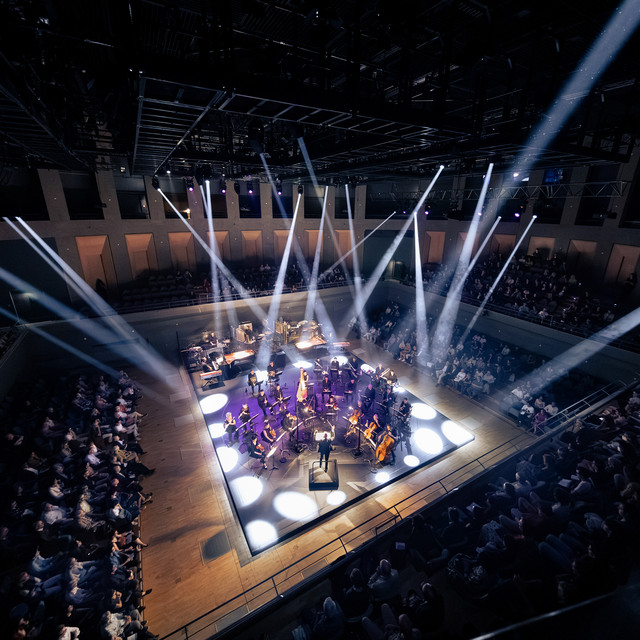
Ensemble Intercontemporain
1982–2026
·
12 albums
Listen
2
/5
Genres
Albums
Similar artists
Genres
21st-Century Classical Music
21st-century classical music is art music in the contemporary classical tradition that has been produced since the year 2000.
Discover
Listen
Spectralism
Spectralism is a movement in contemporary classical music that treats timbre and the acoustic spectrum as primary compositional materials. Rather than building music from abstract pitch-class sets or functional harmony, spectral composers derive harmonies, orchestrations, and formal processes from…
Discover
Listen
Musique Concrète Instrumentale
Musique concrète instrumentale is a compositional approach that transfers the ideas of musique concrète to the realm of purely acoustic instruments. Instead of manipulating recorded sound objects on tape or digitally, composers write for traditional instruments played with unconventional, extended…
Discover
Listen
Darmstadt School
The Darmstadt School refers to the post–World War II circle of composers who gathered around the Internationale Ferienkurse für Neue Musik (International Summer Courses for New Music) in Darmstadt, West Germany.
Discover
Listen
Scene
Modern Performance
Modern performance is a contemporary classical performance practice focused on post‑war and post‑tonal music, cutting‑edge notation, and exploratory sound. It privileges close composer–performer collaboration, precision of ensemble craft, and the use of extended techniques, electronics, and…
Discover
Listen
Electroacoustic
Electroacoustic music is a broad art-music tradition that integrates recorded acoustic sound and electronically generated or processed sound into coherent musical works.
Discover
Listen
Musique Concrète
Musique concrète is an electroacoustic approach to composition that uses recorded real‑world sounds (objets sonores) as primary material rather than traditional instruments or notation. Composers edit, splice, loop, reverse, time‑stretch, filter, and otherwise transform these recordings to create…
Discover
Listen
Contemporary Classical
Contemporary classical is the broad field of Western art music created after World War II. It embraces an array of aesthetics—from serialism and indeterminacy to minimalism, spectralism, electroacoustic practices, and post‑tonal lyricism—while retaining a concern for notated composition and timbral…
Discover
Listen
Serialism
Serialism is a compositional method in which musical parameters are organized into ordered series that govern a work’s structure. Most famously, twelve‑tone serialism uses an ordered row of the 12 pitch classes, deploying transformations such as prime, inversion, retrograde, and retrograde…
Discover
Listen
Twelve-Tone Technique
Twelve-tone technique (also called dodecaphony or twelve-note serialism) is a method of musical composition that treats all twelve pitch classes of the chromatic scale with equal priority, intentionally avoiding a tonal center.
Discover
Listen
Expressionism
Expressionism in music is an early-20th-century modernist movement that foregrounds inner psychological states, anxiety, and alienation through highly charged sonic language. It abandons traditional tonal centers in favor of atonality or extreme chromaticism, embraces dissonance without immediate…
Discover
Listen
Avant-Garde
Avant-garde music is an umbrella term for boundary-pushing practices that challenge prevailing norms of harmony, rhythm, timbre, form, and performance. It privileges experimentation, conceptual rigor, and a willingness to reframe what counts as music at all.
Discover
Listen
Atonality
Atonality is music that lacks a tonal center or key. Instead of organizing pitches around a dominant tonic and functional harmony, it treats all twelve chromatic notes as potentially equal, freeing them from the hierarchical relationships that define common‑practice tonality.
Discover
Listen
Second Viennese School
The Second Viennese School is an early‑20th‑century circle of Viennese composers led by Arnold Schoenberg, with his pupils Alban Berg and Anton Webern. It marks the decisive move from late‑Romantic chromaticism into atonality and the codification of the twelve‑tone (dodecaphonic) method, reshaping…
Discover
Listen
Scene
Impressionism
Impressionism in music is a late-19th- and early-20th-century style that prioritizes color, atmosphere, and suggestion over overt drama and functional harmonic progressions. Originating in France, it parallels the visual arts movement in its fascination with light, timbre, and fleeting impressions.
Discover
Listen
Monodrama
Monodrama is a staged musical work centered on a single character whose thoughts, memories, or actions unfold in real time. It typically features one singer (or sometimes a speaking actor) accompanied by orchestra, chamber ensemble, or piano, turning the solitary voice into the sole onstage…
Discover
Listen
Classical Contralto
Classical contralto refers to the lowest standard female voice type in Western classical music, with a rich, dark timbre and a comfortable tessitura centered in the lower middle register. Typical written range spans roughly E3–F5 (or even down to C3 for true contraltos), with the most resonant…
Discover
Listen
Concerto
A concerto is a large-scale composition that sets one or more solo instruments in dynamic dialogue with an orchestra. Its core idea is contrast—between soloist and tutti—and the dramatic negotiation of power, color, and thematic responsibility.
Discover
Listen
Chamber Music
Chamber music is a tradition of composed music for small ensembles—typically one player per part—intended for intimate spaces such as courts, salons, and private rooms rather than large public halls.
Discover
Listen
Orchestral
Orchestral music refers to compositions written for an orchestra—a large ensemble typically built around a string section (violins, violas, cellos, double basses), complemented by woodwinds, brass, percussion, and often harp, keyboard, or other auxiliary instruments. A conductor coordinates the…
Discover
Listen
Opera
Opera is a large-scale theatrical genre that combines music, drama, and visual spectacle, in which the story is primarily conveyed through singing accompanied by an orchestra. It unites solo voices, ensembles, and chorus with staging, costumes, and often dance to create a total artwork.
Discover
Listen
Classical
Classical music is the notated art-music tradition of Europe and its global descendants, characterized by durable forms, carefully codified harmony and counterpoint, and a literate score-based practice.
Discover
Listen
Show all 22 genres
Albums
2026
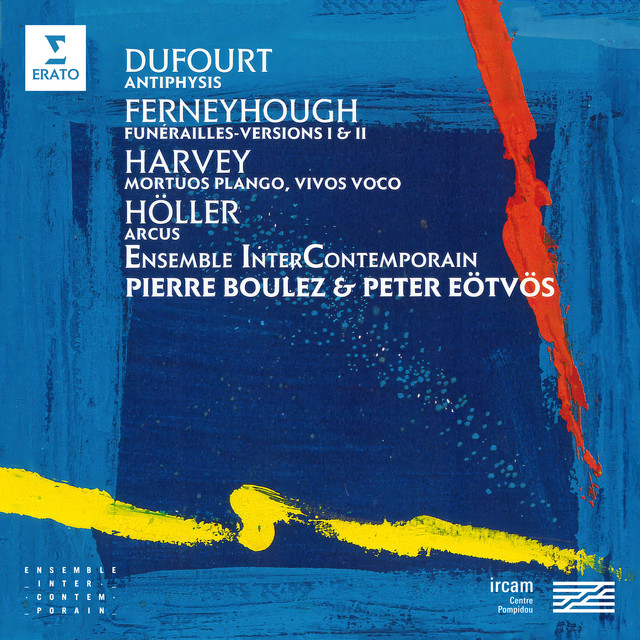
Dufourt: Antiphysis - Ferneyhough: Funérailles - Harvey: Mortuos plango, vivos voco - Höller: Arcus
Pierre Boulez, Peter Eötvös, Ensemble Intercontemporain, Brian Ferneyhough, Gér…
Twelve-Tone Technique
2022
1
/5
Quanta
Einar Torfi Einarsson
Musique Concrète Instrumentale
2022
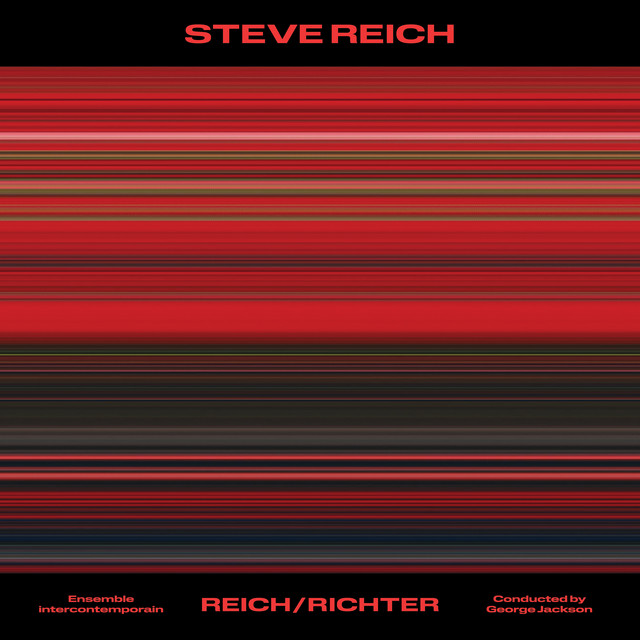
Steve Reich: Reich/Richter
Steve Reich, Ensemble Intercontemporain, George Jackson
Modern Performance
2009
1
/5
Cassandre
Michael Jarrell
Monodrama
Classical
Opera
2009
1
/5
Fragments pour un portrait; Partita I
Philippe Manoury
Spectralism
Classical
2004
1
/5
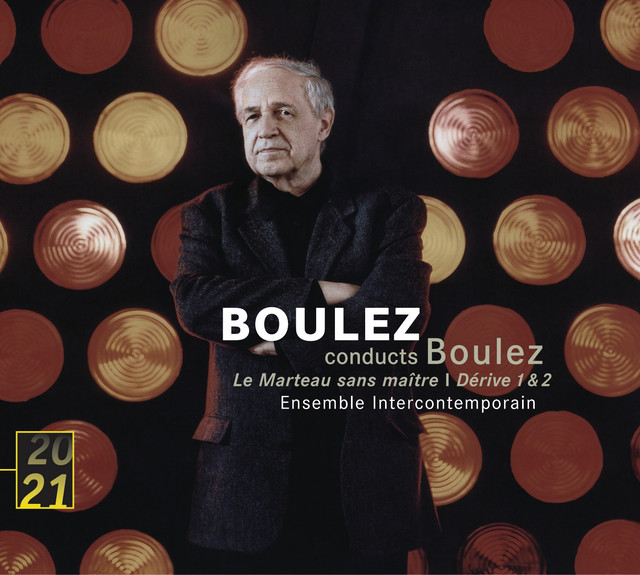
Boulez Conducts Boulez: Le marteau sans maître; Dérive 1 & 2
Pierre Boulez / Ensemble intercontemporain
Classical Contralto
Serialism
2000
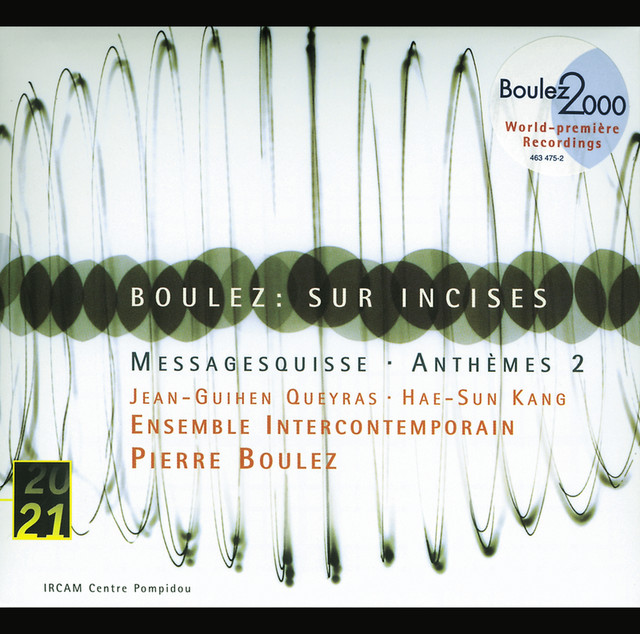
Boulez: Sur Incises; Messagesquisse; Anthèmes 2
Pierre Boulez, Ensemble Intercontemporain, Ensemble De Violoncelles De Paris
Twelve-Tone Technique
1998
1
/5
Sequenzas
Luciano Berio / Ensemble intercontemporain
Darmstadt School
1998
2
/5
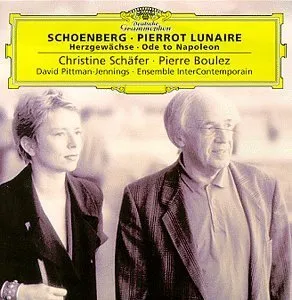
Pierrot lunaire; Herzgewächse; Ode to Napoleon
Arnold Schoenberg
Atonality
Expressionism
Second Viennese School
1998
1
/5
Répons; Dialogue de l'ombre double
Pierre Boulez
Serialism
1995
1
/5
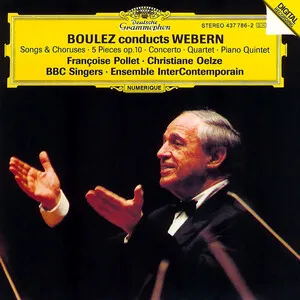
Boulez Conducts Webern: Songs & Choruses; 5 Pieces Op. 10; Concerto; Quartet; Piano Quintet
Anton Webern
Expressionism
Second Viennese School
1982
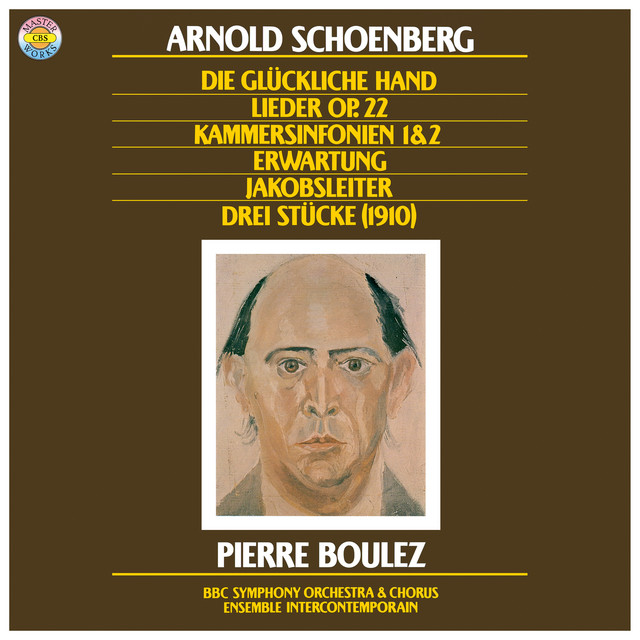
Schoenberg: Die Jakobsleiter & Erwartung, Op. 17 & Die glückliche Hand, Op. 18 & Chamber Symphonies Nos. 1 + 2 & Lieder…
Arnold Schoenberg, Pierre Boulez, BBC Symphony Orchestra, Ensemble Intercontemp…
Atonality
Similar artists
Hide discovered
3
/5
Pierre Boulez
Classical
Expressionism
Impressionism
1
/5
Arditti Quartet
Chamber Music
Classical
String Quartet
3
/5
Béla Bartók
Classical
Concerto
Chamber Music
2
/5
Robert Craft
Ballet
Classical
Expressionism
2
/5
WDR Sinfonieorchester Köln
Classical
Electroacoustic
Musique Concrète
2
/5
Olivier Messiaen
Classical
Mélodie
Modern Classical
2
/5
Karlheinz Stockhausen
Integral Serialism
Serialism
Darmstadt School
1
/5
Yvonne Loriod
Classical
Contemporary Classical
Avant-Garde
1
/5
Peter Eötvös
Classical
Concerto
Avant-Garde
1
/5
Joshua Pierce
Avant-Garde
Classical
Concerto
Download our mobile app
Get the Melodigging app and start digging for new genres on the go
Download on the App Store
Get it on Google Play
© 2026 Melodigging
Give feedback
About & FAQ
Legal
Melodding was created as a tribute to
Every Noise at Once
, which inspired us to help curious minds keep digging into music's ever-evolving genres.
Ensemble Intercontemporain: genres & albums | Melodigging