

Description
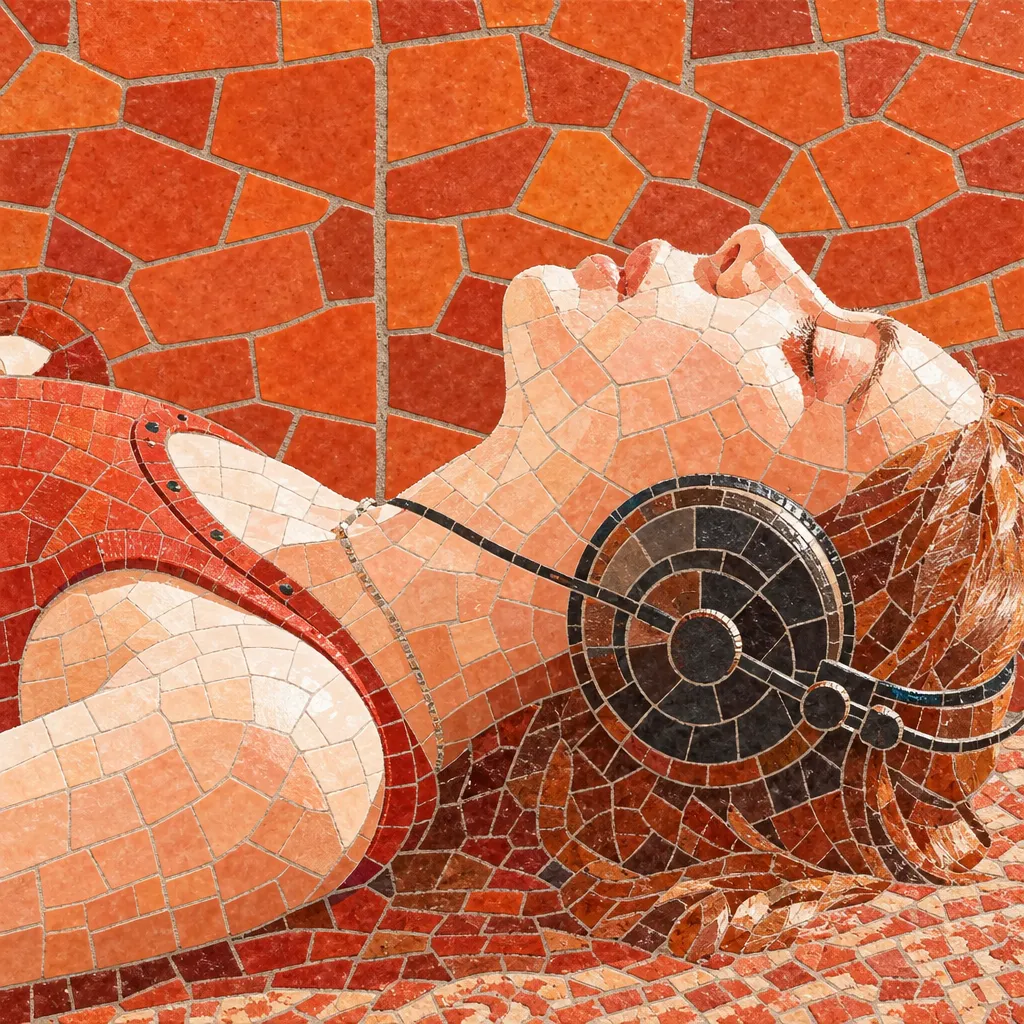
8D is not a musical genre in the usual sense, but a spatial-audio treatment applied to music. It takes a stereo track and creates the impression that the sound is moving around the listener’s head, often circling or appearing to come from outside it. The effect is intended for headphones; it does not add new audio channels.
Panning, volume automation, reverb and spatial processing can give the music a floating, immersive quality. Some mixes emphasize conspicuous movement between the ears, while others aim for a subtler sense of being surrounded by a performance. The underlying song can belong to different styles, so its melody, rhythm and mood are not fixed by the 8D label.
Based on: melmagazine.com, abbeyroad.com, vrtonung.de, routenote.com and
More on: Every Noise at Once

8D Audio is Accidentally Genius- A Binaural Sound Case Study
Altera Sound
History
Technical background
8D audio draws on principles associated with binaural sound, whose history reaches back to the late 19th century. Unlike a new binaural recording, an 8D version can be made by processing an existing stereo track.
Online spread
The first online 8D track is not clearly identified. The treatment became popular through videos of existing songs on YouTube. One account traces its initial use to Bollywood music, followed by its application to pop. Early examples often used pronounced left-to-right movement; later mixes could aim for a more restrained spatial illusion.
Reception
Listeners have made some 8D videos widely popular, but the effect has also attracted criticism. Some critics regard it as a gimmick or a limited use of spatial audio, while also welcoming the possibility that similar tools could inspire more creative production.
Prepare the track
Begin with a stereo piece or an arrangement whose parts you can control. The defining task is spatial treatment rather than writing in a particular harmonic or rhythmic style. Listen through headphones as you work, since the intended illusion depends on headphone playback.
Create movement
Use panning and volume automation to move the sound across the stereo field. Add spatial processing to suggest movement around or outside the listener’s head, and use reverb to give that movement a sense of space. You could apply the effect to the whole mix or work with individual parts for more control.
Refine the illusion
Experiment with both obvious circling and gentler motion. Compare how the movement interacts with the music: a restrained approach may preserve the sense of a performance in a space, while a more pronounced sweep makes the effect itself more prominent.
How To Make 8D Audio
Dylan Tallchief

Convert Any Audio to 8D Audio 🔉
BurnerBiits Clips

HOW TO MAKE 8D AUDIO - Audacity Tutorial | Fast & Easy (2021)
Always Creating

How to make 8D/10D/100D sound? | Mix With Vasudev
Mix With Vasudev

Top albums






Best playlists
8d
Melodigging

The Sound of 8D
Every Noise at Once
8d
Chosic

Best of 8D
volt.fm

8D Audio Mix 2021 ⚡ EDM Remixes of Popular Songs ♫ 8D Music🎧
8D TUNES
