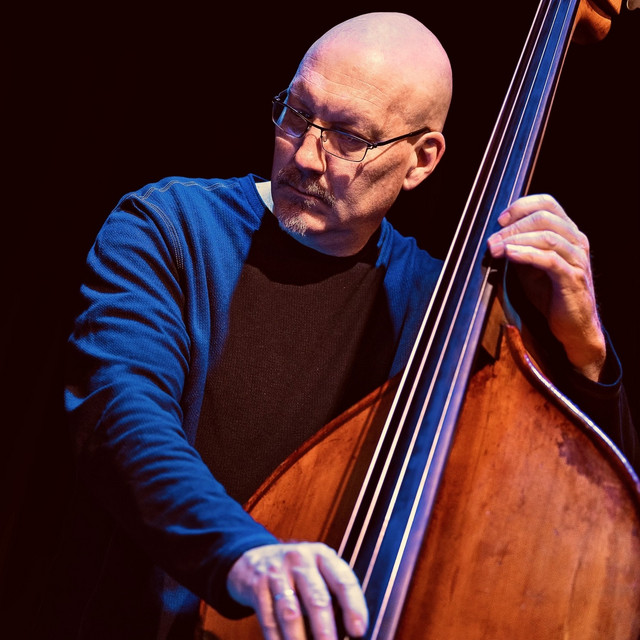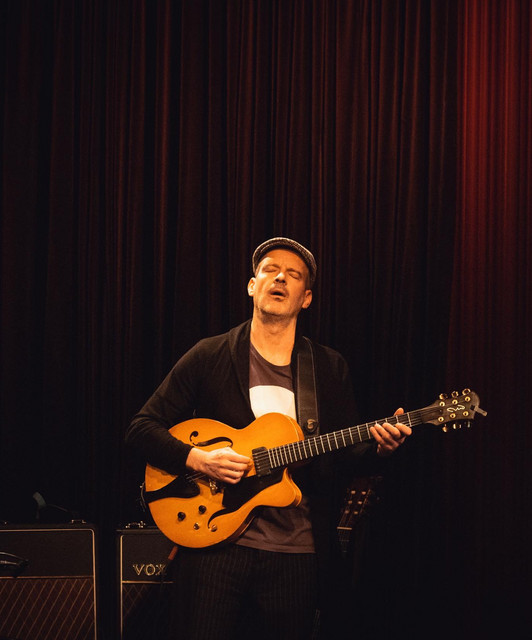
Description
Austrian jazz is the jazz scene of Austria, encompassing musicians, venues, broadcasters, educational institutions and independent initiatives rather than a single national sound. It ranges from small-group playing to orchestral jazz and big bands, with room for both established approaches and non-purist experimentation.
Vienna and Graz have also been meeting places for musicians with connections to the Balkans and Turkey. The scene includes instrumentalists and singers, but its range cannot be reduced to one language, instrumentation or musical tradition.
Based on: musicexport.at, jazzpopforschung.kug.ac.at, mdw.ac.at
More on: Every Noise at Once
History
Early encounters
After World War I, Viennese audiences encountered dance orchestras whose music bore some jazz influence. A small jazz centre operated at Max Glasl’s Weihburg-Bar from 1922 to 1934. Jazz activity continued under the Nazi regime, despite its prohibition of the music.
Postwar growth
After World War II, jazz gradually gained popularity, and Viennese musicians found work in clubs run by the occupation forces. Dance music attracted audiences more readily than jazz itself, while some leading musicians left Austria. Interest also grew beyond Vienna: Graz became known for its jazz institute, and the Austrian Jazz Federation and radio reforms helped improve working conditions for musicians.
Broadcasting and clubs
The ORF Radio Big Band existed from 1971 to 1982, an important period for Austrian jazz. Clubs also offered a setting for live performance and recording: the Fritz Pauer Quartet made live records at Jazz bei Freddy, founded in 1964.
A changing scene
Since the 1990s, musicians arriving from different backgrounds have contributed to the scene. Bassist Nenad Vasilic and singer Fatima Spar are among those associated with connections between Austrian jazz and the Balkans. More recently, the loss of the Vienna Art Orchestra has coincided with the emergence of new big bands and independent, musician-led structures.
Choose an ensemble
There is no single Austrian-jazz formula to reproduce. You could write for a small improvising group or arrange for a larger orchestra or big band. For a large ensemble, develop contrasting passages for sections and soloists; for a smaller group, leave space for the players to respond to one another.
Build the jazz material
A common approach in jazz is to begin with a melody and a harmonic framework, then use them as the basis for improvisation. You could alternate a clearly stated theme with solos and return to the theme at the end. Shape the rhythm and harmony around the character you want rather than treating any one setting as mandatory.
Explore connections
Some musicians in the Austrian scene have connections to Balkan music, while independent groups have embraced non-purist approaches. If those directions interest you, you could experiment with regional melodic ideas or combine jazz improvisation with other musical influences. Treat them as possibilities within a varied scene, not as requirements.