Description
Brazilian trap centers on Portuguese-language voices over relaxed, bass-heavy hip-hop grooves. Melodic rap and conversational verses sit alongside sung hooks, often with layered ad-libs, harmonies and noticeable pitch correction. The term comes from Spotify’s genre labels for artists, with scant written discussion of the style.
Much of the music pairs deep electronic bass and kicks with crisp snares or claps and quick, rolling hi-hats. Clean guitar chords or arpeggios often circle through minor-key progressions, while soft synth pads add atmosphere. The production tends to be polished, with voices forward in the mix and reverb or delay lending space to the backing parts. The pulse is generally laid-back, even when the hi-hats move quickly; the mood can be mellow, reflective or melancholic, with a romantic or nocturnal undertone.
The music ranges from melodic trap to tracks with the punchy kick-and-snare patterns of boom bap. It sits close to Brazilian hip hop, with an emphasis on rap flows and collaborations between vocalists. Portuguese titles such as “Músicas de amor nunca mais,” “Amor de Fim de Noite” and “Segredos e Defeitos” suggest themes of love, intimacy and personal reflection. Much of the playlist’s music comes from the 2020s.
Based on: Spotify's genre tags and playlist
Build the groove
Start with a relaxed hip-hop pulse. For a trap foundation, program a deep bass kick, a crisp snare or clap and quick, rolling hi-hats; let the low end carry weight without crowding the vocal. For a boom bap variation, use a punchy kick and snare with steadier hi-hats.
Add harmony and atmosphere
Loop a minor-key guitar progression, using clean chords or arpeggios. Add a restrained synth pad and shape the bass around the chord changes. Keep the arrangement spacious and the mix polished.
Write and record vocals
Draw on Brazilian hip hop for rhythmic Portuguese rap, alternating conversational lines with melodic phrases or a sung hook. Layer doubles and ad-libs, and experiment with pitch correction, reverb and delay while keeping the lead voice upfront.

Trap Producer Makes Brazilian Funk For The First Time
Ocean

Top albums





Best playlists
Brazilian Trap
Melodigging
Brazilian Trap
Chosic

Best of Brazilian Trap
volt.fm

AFRO MOOD | The Best of Afro Trap, Shatta, Dancehall, Baile Funk, Amapiano 🎉 | By DJ T-Sia
T-Sia

PHONK DO BRASIL MIX ※ AGGRESSIVE STREET FUNK, TRAP, GYM BEATS
Rua808
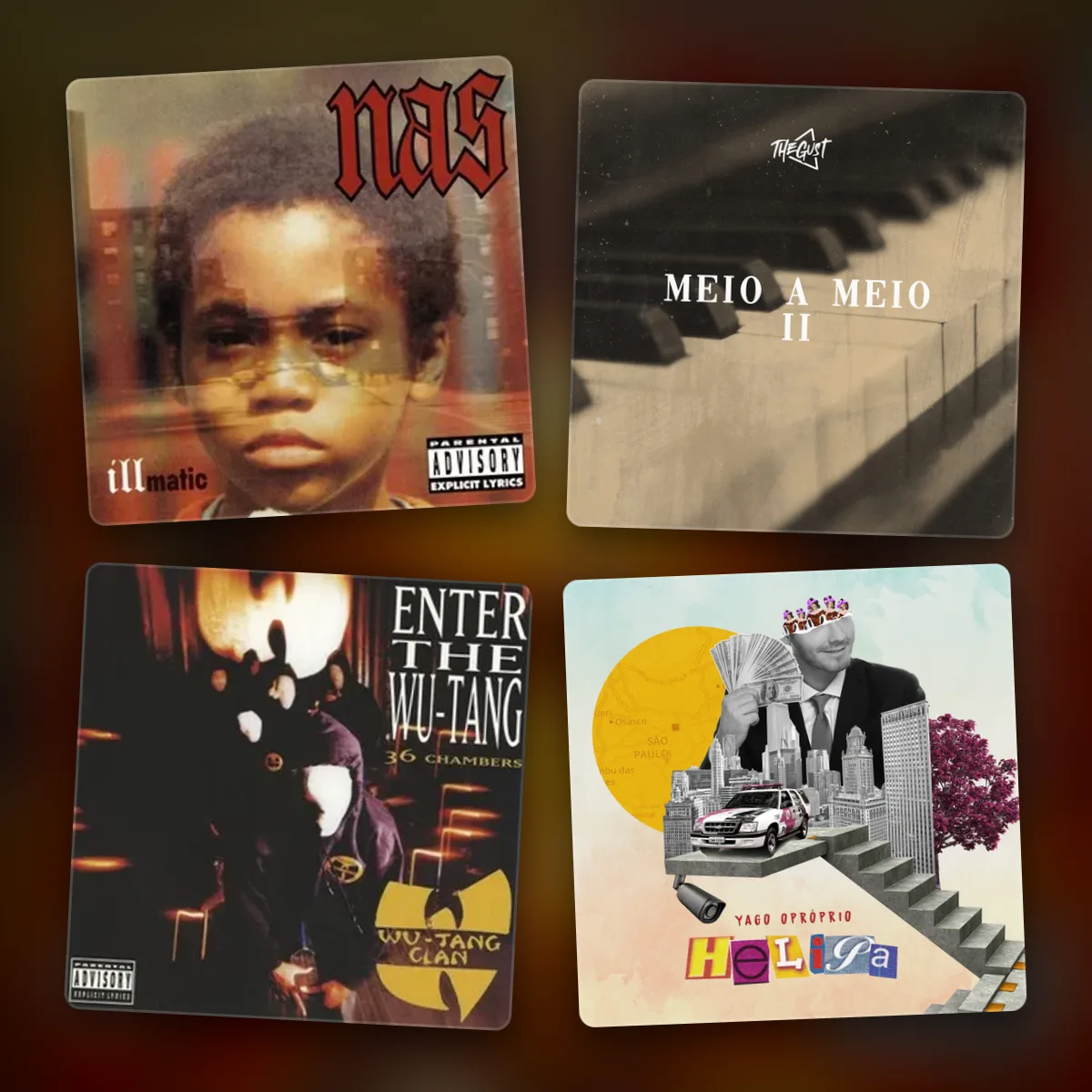
Influenced by


Other similar genres
Genres sharing the most artists with Brazilian Trap