Description
Compositional ambient is often slow, spacious instrumental music, built from piano, bowed strings and sustained electronic tones. The term is used in Spotify’s genre labels and Every Noise at Once, but has scant published coverage. Pieces range from piano- and string-led chamber music to more diffuse electronic ambient, usually without drums or a clearly marked beat.
Sparse keyboard motifs, repeated notes and arpeggios can give the music motion, while strings carry long melodic lines or settle into sustained chords. Synthesizer pads and drones fill out the background, and some pieces add plucked strings or processed guitar. Deep reverb gives the instruments a wide, lingering presence; delay can stretch notes further into the surrounding texture. The harmony is often tonal, with minor or modal colours lending a reflective, melancholic mood.
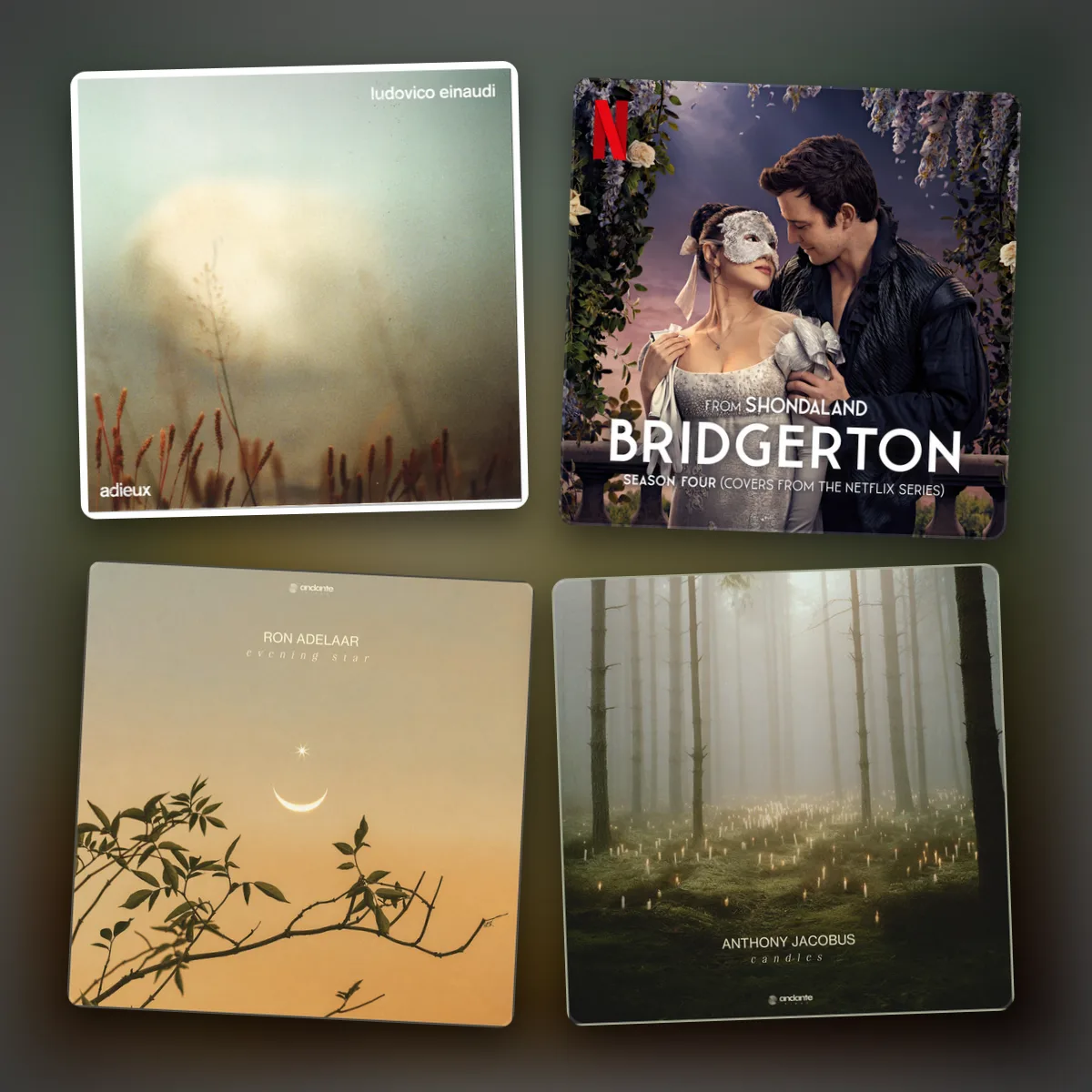
The music sits close to ambient, minimalism and contemporary classical music: it shares ambient’s attention to atmosphere, minimalism’s repeated figures and sustained harmony, and the instrumental palette of chamber composition. Tracks in the playlist are mostly from the 2010s, and include film-score pieces alongside independent recordings. Many titles are in English, though French and German titles are also represented.
Based on: Every Noise at Once, Spotify's genre tags and playlist

Brian Eno: How To Make Original Ambient Music - BBC Click
BBC Click

A Brief Guide to Ambient Music
It's Boundo.

What is Ambient Music?🌌
Lunacy
Start with a small motif
Write a sparse piano or keyboard figure using a few repeated notes or a gentle arpeggio. A minor or modal harmony can give it a contemplative character. Let the figure move slowly, or allow it to unfold without a strict pulse.
Build the texture
Add bowed strings for sustained chords or a simple, flowing line. Layer a soft synthesizer pad or drone underneath, taking cues from ambient and drone music. Keep the arrangement instrumental and leave out conventional drums; repetition in the pitched parts can carry the motion.
Shape the space
Use generous reverb and, where useful, delay to let notes overlap and decay. Draw on minimalism by making gradual changes to a repeating figure, and on contemporary classical music by treating piano and strings as distinct voices rather than filling every gap.

How to Make Beautiful Ambient Soundscapes
K. Hart

Learn to make ambient music in 4 simple steps
Monotrail Tech Talk

How to Make Ambient Music Step-by-Step in Logic Pro (for Beginners)
Tyler.l

Ambient Step by Step Tutorial - Techniques and Processing: Creating Ambient Environment Soundscapes
Matthew Florianz / Ambient.Environment.Soundscapes

Top albums






Best playlists


Influenced by


Other similar genres
Genres sharing the most artists with Compositional Ambient