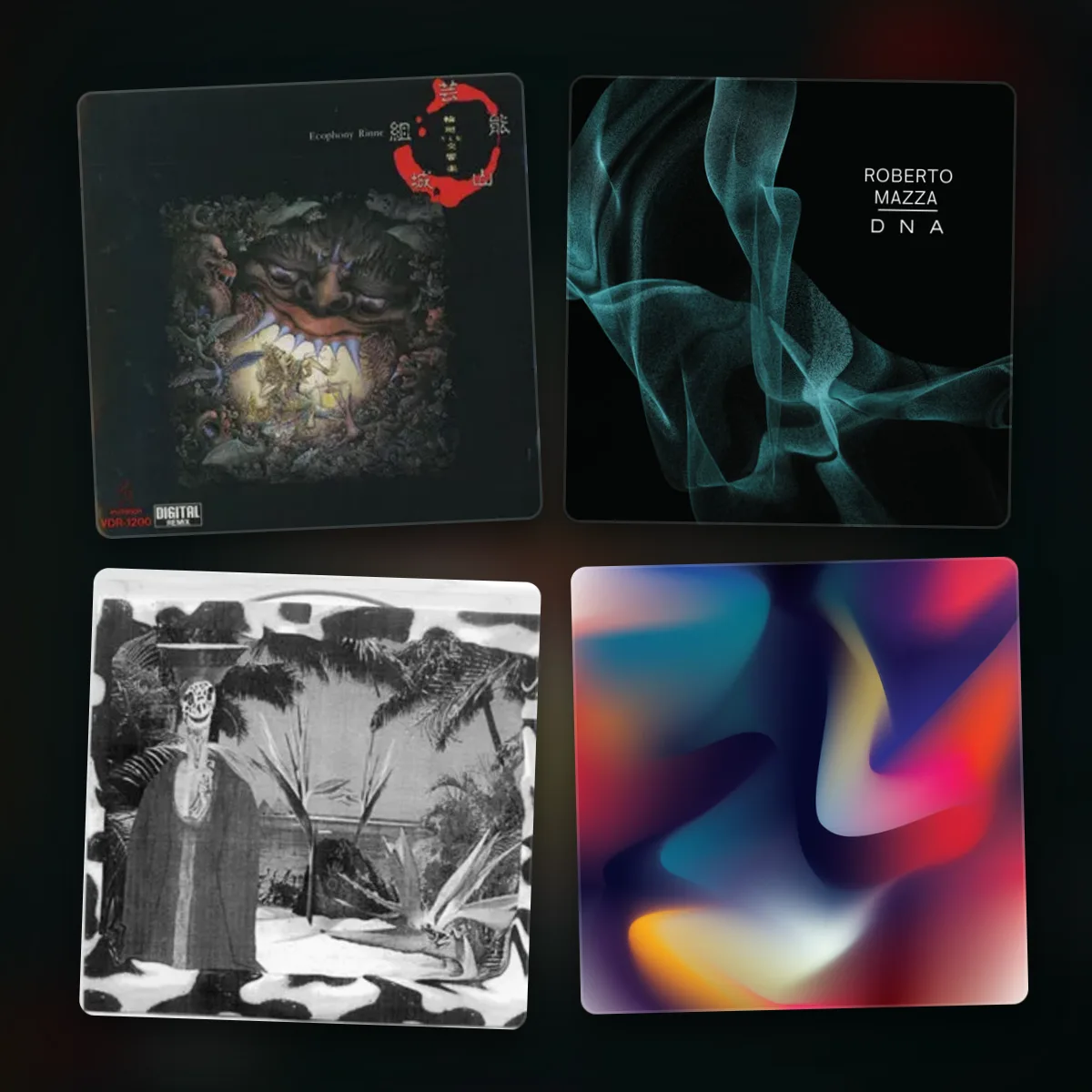
Description
Dronescape, also called drone music, is a minimalist style built around sustained or repeatedly sounding tones, notes and clusters. Rather than relying on frequent harmonic change, it can unfold as a prolonged soundscape in which small shifts are heard against a persistent drone.
Electronic instruments and electronically processed acoustic sounds are often used to create dense, relatively static harmonies. The resulting sense of time can feel suspended or floating. Despite these shared traits, musicians approach the style from varied cultural backgrounds and with different aims.
Based on: Wikipedia, en.wiktionary.org
More on: Every Noise at Once
History
Emergence
Drone music emerged in the United States in the 1950s, although it had antecedents in different places and periods. In the 1960s, La Monte Young developed one of its early non-ethnic forms.
Later contexts
The style subsequently became associated with artists working in underground music, post-rock and related experimental styles. Its shared emphasis on sustained sound has accommodated musicians with diverse backgrounds and artistic purposes.
Build a drone
Begin with a sustained or repeated note, sound or cluster. Let it remain audible long enough for the listener to notice its texture and overtones. Add layers close enough to form a dense harmony, while keeping the overall sound relatively stable.
Shape the soundscape
Use electronic sounds, processed acoustic instruments or a combination of both. Try changing the balance, tone or intensity of individual layers gradually, so that small harmonic shifts become perceptible without disrupting the suspended feel. You could also let a repeated sound merge into the sustained background rather than treating it as a prominent rhythmic pattern.

C Drone For Musical Practice & Meditation
Tunes & Tools - Jon Antonsson

Musical Drones and Pedal Tones [Theory and Songwriting]
Signals Music Studio

How I create Drone music that is not boring #synth #ambient #dronemusic
Electro / Magnetic

The Easiest Way to Create an Atmospheric Drone in Music
Synth Designer

Top albums

Best playlists


Other similar genres
Genres sharing the most artists with Dronescape