Description
Kosmische Musik is a form of German electronic music associated with space and otherworldly imagery. It is often instrumental, built around synthesizers and expansive, ambient soundscapes. Effects processing and tape techniques help shape its emphasis on texture.
The term is sometimes used interchangeably with krautrock or as a German equivalent of “space rock.” Yet kosmische Musik often moved away from rock conventions, drawing instead on electronic composition.
History
A cosmic label
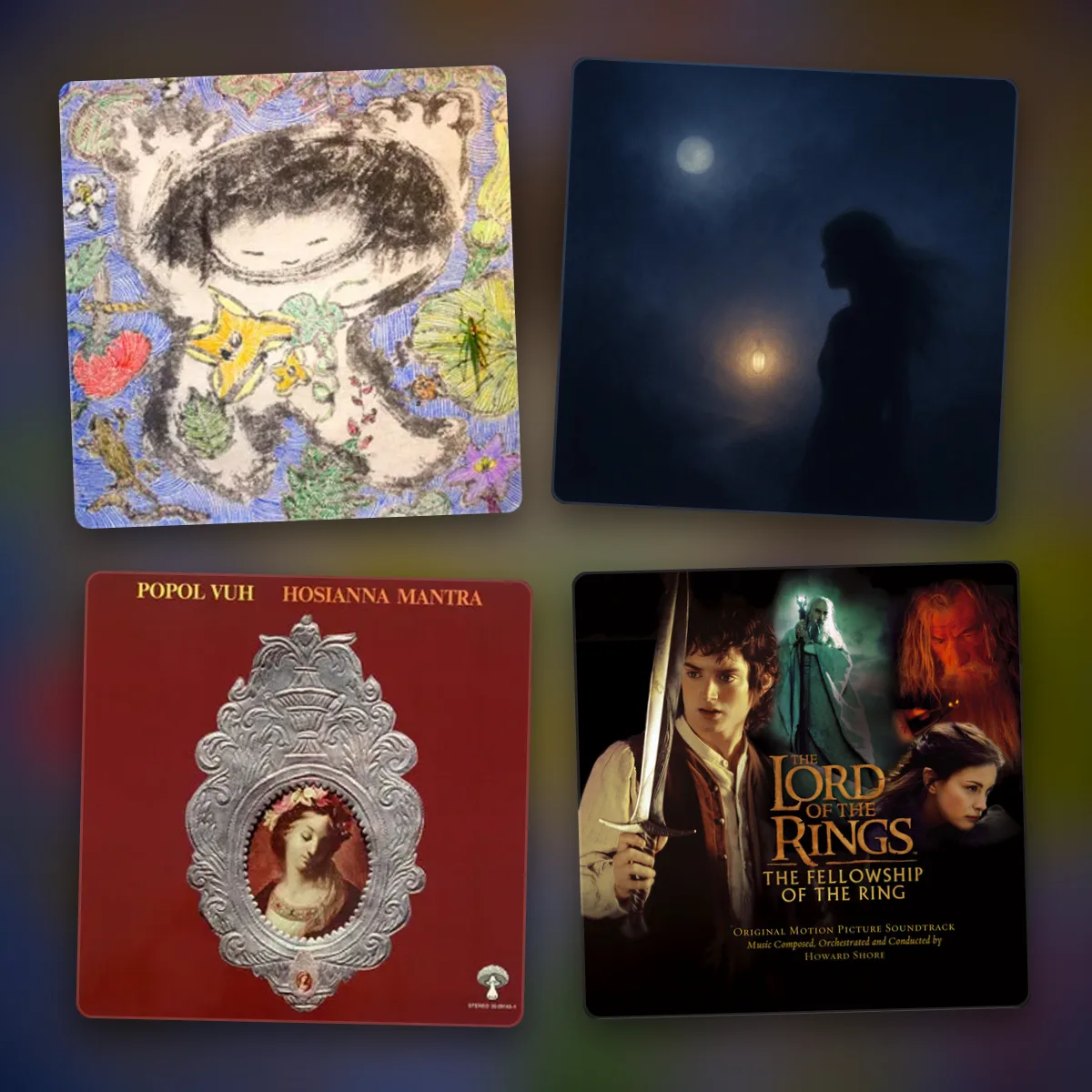
Kosmische Musik emerged in Germany in the 1970s. Edgar Froese coined the term in 1971, and producer Rolf-Ulrich Kaiser later used it to market music by acts including Ash Ra Tempel, Tangerine Dream and Klaus Schulze. In 1972, Kaiser’s Ohr Records released a compilation called Kosmische Musik, which also included Popol Vuh.
Sound and legacy
Producer Conny Plank was a central figure in the sound, with a focus on texture, effects and tape editing. Although the label was sometimes used synonymously with krautrock, some German artists preferred it to that English term.
The style influenced several later forms of electronic music, including ambient and new age. In the 2000s, the American post-noise group Emeralds helped prompt renewed interest in 1970s kosmische Musik; the related later style became known as neo-kosmische.
Build a soundscape
Start with synthesizers as the main sound source. Create sustained tones or evolving layers, then use effects to alter their color and sense of space. Tape-based recording or editing can be used to reshape and combine textures. An instrumental arrangement leaves room for the sounds themselves to carry the piece.
Develop the atmosphere
Aim for an expansive or otherworldly character rather than relying on conventional rock songwriting. You could introduce layers gradually, let a texture change over time and use processing to make familiar tones less immediately recognizable. Draw on electronic composition when deciding how the sounds develop; a fixed verse-and-chorus structure is not essential.



Best playlists
Has influenced