Description
Pakistani rock is the broad rock scene produced in Pakistan, rather than a single, uniform style. It brings British and American rock into contact with Pakistani classical music, while encompassing currents from pop-rock and progressive rock to hard rock and heavy metal.
Songs are predominantly in Urdu, although bands also perform in Punjabi, Pashto, Sindhi and English. The scene has included both underground groups and widely popular bands, with television and music-chart shows helping bring rock to a larger audience.
Based on: Wikipedia
More on: Every Noise at Once, Wikidata

The Pakistani Music Wave - Sunidhi Chauhan | Raj Shamani #shorts
Raj Shamani Shorts
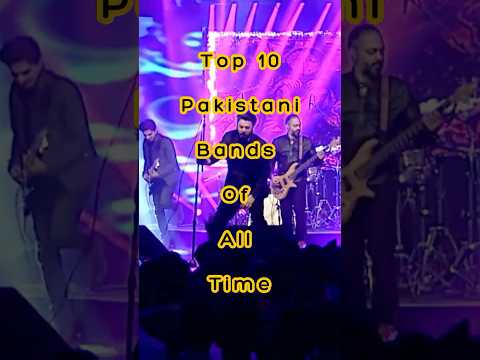
Top 10 Pakistani Bands of All Time 🇵🇰
Top Ten
History
Beginnings in the 1980s
Rock took root in Pakistan in the 1980s as cassettes by Western bands circulated. By 1983–85, local underground groups were playing at university campuses and five-star hotels. The scene grew during the rule of President Zia-ul-Haq, who denounced Western culture, including rock music. Vital Signs and Junoon later came to be regarded as pioneers of Pakistani rock.
Expansion and television
During the 1990s, bands including Junoon and Strings contributed to the expansion of rock and pop-rock. Satellite television helped the music reach audiences, while shows such as Music Channel Charts presented and rated pop and rock performers.
Metal and later bands
Heavy metal was also part of the scene: Final Cut and Barbarians were among its early Pakistani bands, and Mizraab became known for progressive metal. In 2002, Pepsi Battle of the Bands brought attention to groups including Aaroh, Mizraab, Entity Paradigm and Mekaal Hasan Band. Noori was among the bands credited with revitalizing Pakistani rock culture.
Choose a direction
Begin by choosing a current within the scene: a song could lean toward pop-rock, progressive rock, hard rock or heavy metal. Rather than treating Pakistani rock as a fixed formula, decide how much emphasis to place on rock arrangements and how much on melodic ideas informed by Pakistani classical music.
Develop the song
Write a vocal melody in Urdu, or explore another language used in the scene, such as Punjabi, Pashto, Sindhi or English. You could let a classically influenced melodic phrase guide the vocal or an instrumental passage, then build a rock song around it.
Arrange and perform
A common rock approach is to use guitars, bass and drums to support the voice. You could contrast a restrained verse with a fuller chorus, or develop instrumental passages for a progressive direction. For a heavier approach, try more forceful guitar riffs and drumming while keeping the melody central.