Description
Deep, shifting bass and crisp electronic drums give psybass much of its weight, while synth pads and short, repeating arpeggios fill out the space around them. The name comes from Every Noise at Once, a map of Spotify genres, and Spotify’s playlist “The Sound of Psybass”; published descriptions are scarce. The music ranges from dark, driving bass music to more spacious, dreamy downtempo.
Beats often move at a mid-tempo or relaxed pace, with booming kicks, sharp backbeats and little bursts of clicks, stutters and rapid percussion. Bass sounds can be smooth and deep or distorted into wobbling, growling riffs. Minor-key synth figures and atmospheric chords give many tracks a tense or introspective cast. Production tends to be detailed and spacious, using reverb, delay, filter sweeps and carefully edited sounds. Voices, when present, are often processed into brief accents rather than continuous lead singing.
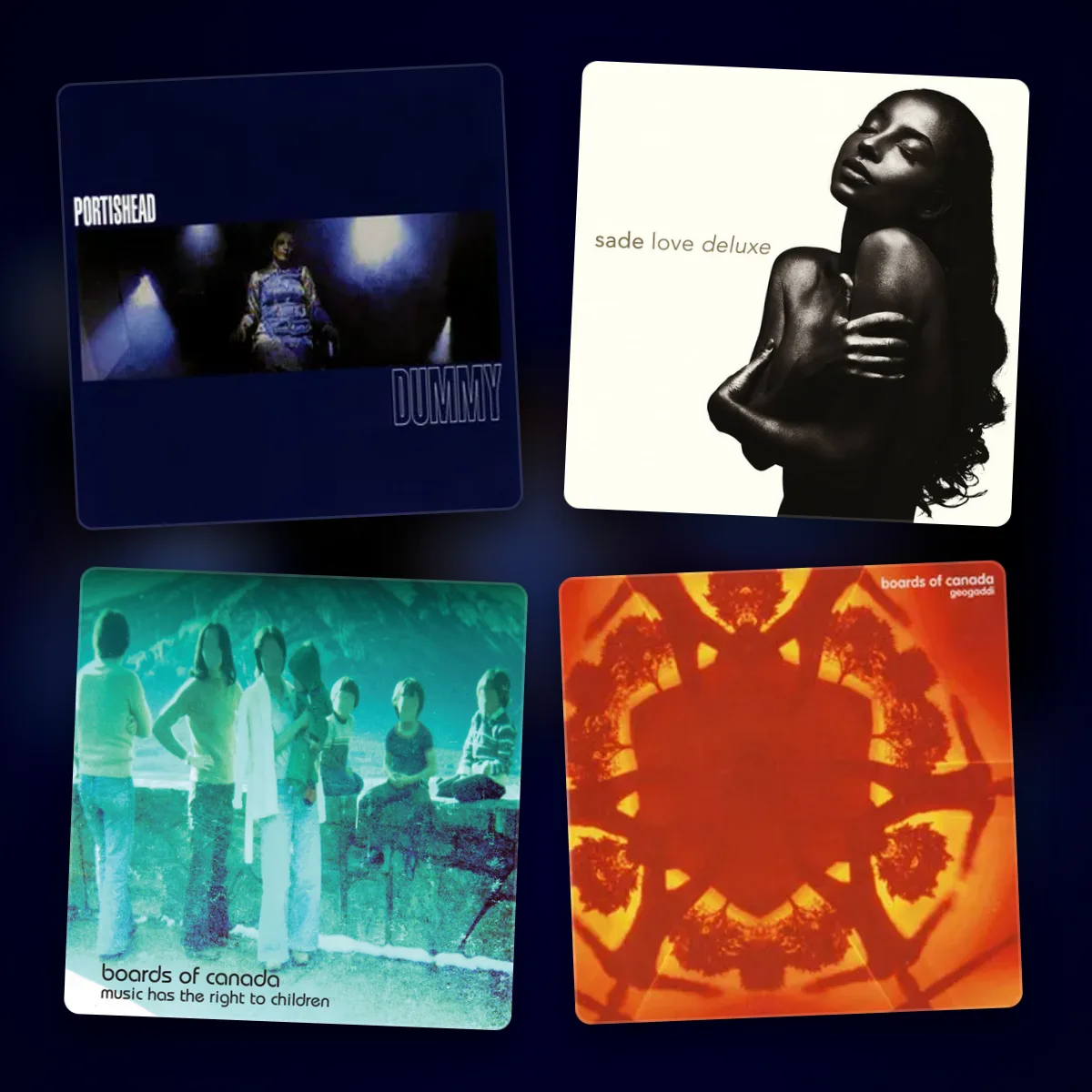
Its artists are also associated with downtempo, glitch and bass music: the first brings a relaxed sense of groove, while the others point toward fractured electronic textures and prominent low frequencies. Titles such as “Cyclic Time” and “Amethyst Forest” evoke abstract and natural imagery. The playlist’s releases are mostly from the 2010s and early 2020s.
Based on: Every Noise at Once, Spotify's genre tags and playlist
Build the groove
Start with an electronic drum kit: use a deep kick, a sharp snare or clap, and a mid-tempo or relaxed pulse. Try a spacious half-time backbeat, then add brief hi-hat rolls, clicks and stuttering edits. Downtempo is a useful reference for the more relaxed grooves.
Shape the bass and synths
Make the low end central, as in bass music. Layer a clean sub-bass with a modulated or distorted synth bass, leaving room for the kick. Build short minor-key plucks or arpeggios over sustained pads; let changes in bass tone carry as much interest as the melody.
Add detail and space
Draw on glitch for small, precisely placed cuts and percussive interruptions. Use filter sweeps, reverb and delay to create depth, and shape the dynamics so the bass and drums remain clear. If using a voice, experiment with short, heavily processed fragments rather than a continuous lead vocal.

How to Make a Widdler Wub in 15 Seconds [Wonk-Deep Dub-140] (Ableton + Serum)
the.Apollo_Project

Serum Hard Psytrance Bass Tutorial (1 Minute)
SpectrumOfSounds
Psytrance bass using only free plugins
Ollie Music

Stop Butchering Psytrance Basslines | Serum2 Tutorial
Ollie Music



Best playlists

Influenced by