

Description
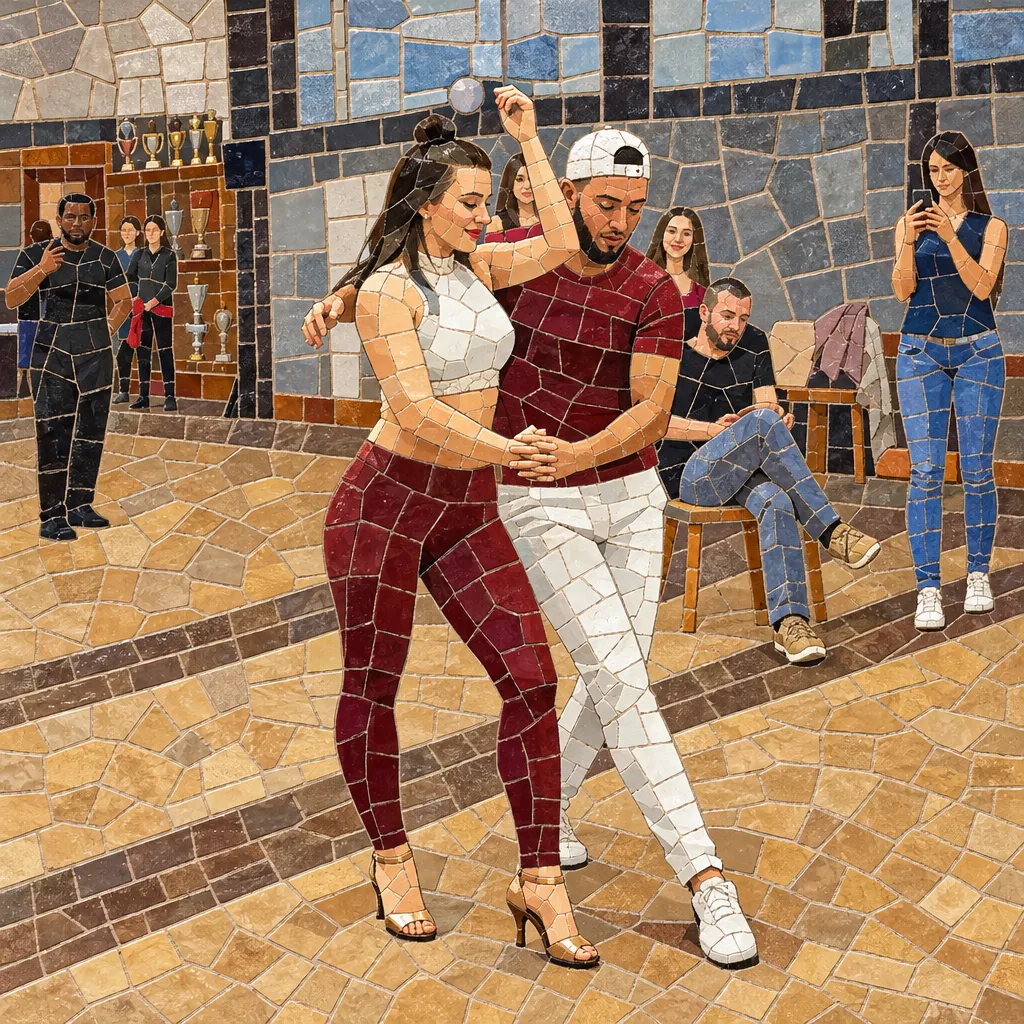
Urban kiz is both a partner-dance style and a label for music made or selected for that dance. Its sound brings together electronic production with influences from ghetto zouk, tarraxa, R&B and hip-hop. Tracks may feature R&B vocals or be primarily instrumental; some favor a slower, atmospheric feel, while others are faster and marked by sudden rhythmic changes.
Breaks, accents, changes in energy and shifts of pace give dancers cues for interpretation. Urban kiz is closely related to kizomba, but its advocates describe it as a distinct style rather than simply a modern version of kizomba. Its dance vocabulary is associated with linear travel, syncopation, stops and isolations.
Based on: kizombafoundations.com, Wikipedia, thekizlab.com, urban-kiz.ro and
More on: Every Noise at Once

What is Urban Kiz? - The Kizomba Channel
Lofi Kizomba Channel
History
From kizomba to a distinct style
Urban kiz developed alongside the spread of kizomba outside Angola and the growth of dance communities across Europe. One account places its emergence in Paris, France, around 2010–2015, as dancers combined kizomba training with hip-hop, contemporary dance and local street culture. Another account traces its origin to Boca, Florida, through Shimmy and Simona, while also placing its development in Paris during the 2010s.
A name and an international scene
The name Urban Kiz was adopted in 2015 to distinguish the emerging style from kizomba. Its identity encompasses both a particular approach to partner dancing and music suited to its changes of movement and energy. Producers associated with shaping its sound include Puto X, Samy Sam Beats, Elji Beatzkilla, Zay'x and Chad. The dance is now practiced internationally in settings including socials, festivals and training programs.
Build the sound
Start with an electronic foundation and draw on the rhythmic character of ghetto zouk or tarraxa. You could add R&B-style vocals or leave the track primarily instrumental; both approaches fit the range of music associated with urban kiz. Hip-hop-influenced textures and an atmospheric electronic arrangement can give the production its contemporary character.
Arrange for dancers
Make the track's accents and changes of energy clear enough for partners to interpret. Use breaks, contrasting sections and shifts in pace to create opportunities for stops, isolations and changes in movement. Rather than keeping the arrangement at one intensity throughout, let rhythmic detail and space alternate so the dancers have different cues to respond to.



Best playlists


Influenced by


