Description
Cyberpunk music is a family of sounds associated with futuristic, dystopian settings rather than a single uniform style. It can range from spacious electronic atmosphere to driving industrial music and punk.
One recurring electronic approach contrasts warm, analogue-style pads and bass with digital damage: glitches, bitcrushing, spectral artifacts and expansive effects make human-sounding tones feel as though they are passing through a failing machine. Sparse arrangements and careful use of register can give the music an uneasy, cinematic sense of space.
Based on: spectral-colors.com, lowlifelore.com, Wikipedia
More on: MusicBrainz, Every Noise at Once, Wikidata

Best Music Genres for Each Cyberpunk Genres | A Discussion
K. J. Rasa
History
Fiction and atmosphere
Cyberpunk developed as a science-fiction mode concerned with the contrast between advanced technology and social decay. Its literary background includes the New Wave of the 1960s and 1970s; over time, it expanded beyond a literary movement into a wider science-fiction subgenre.
Music and the label
By the early 1990s, some musical and fashion trends were being labeled cyberpunk. The music associated with the term has remained varied rather than forming a single consistent style. Its reference points include Vangelis’s synthesizer work for Blade Runner, industrial noise and synthwave, as well as the punk of Samurai in Cyberpunk 2077.
Build the sound
Start with a warm analogue-style pad or bass sound, then contrast it with a colder, damaged layer. Try bitcrushing, glitch effects or spectral processing on a copy of the sound, keeping enough of the original warmth audible for the contrast to matter. Reverb and other spatial effects can make the result feel expansive.
Shape the atmosphere
Leave gaps between parts rather than filling every register. Minor keys or modes can support a darker atmosphere, but pay close attention to whether sounds sit low, high or in the middle, and how much space they leave for one another.
Choose a direction
For an atmospheric track, let sustained textures and bass carry the arrangement. For a more driving section, draw on industrial music: you could use stark percussion and distorted loops, bringing them forward against the more spacious synthesizer layers.
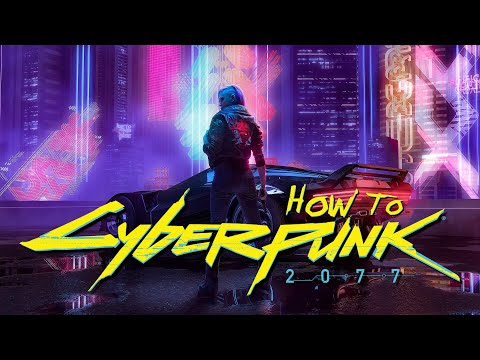
HOW TO CYBERPUNK 2077 MUSIC
Dylan Tallchief

How to Cyberpunk | FL Studio Tutorial
Praxi Plays

HOW TO CYBERPUNK 2077 MUSIC (FREE FLP)
Elation

How to Cyberpunk as quickly as possible
Gabe Miller Music

Top Cyberpunk tracks
- Listen to As Alive As You Need Me To Be by Nine Inch NailsAs Alive As You Need Me To BeNine Inch Nails · As Alive As You Need Me To Be, 2025
- Listen to Never Take Fire - Secret Re-Work by Ghost & WriterNever Take Fire - Secret Re-WorkGhost & Writer · Dependence 2013, 2013
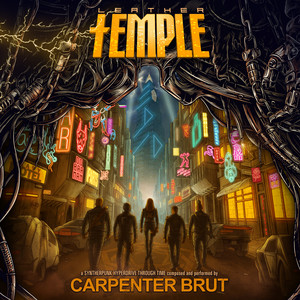
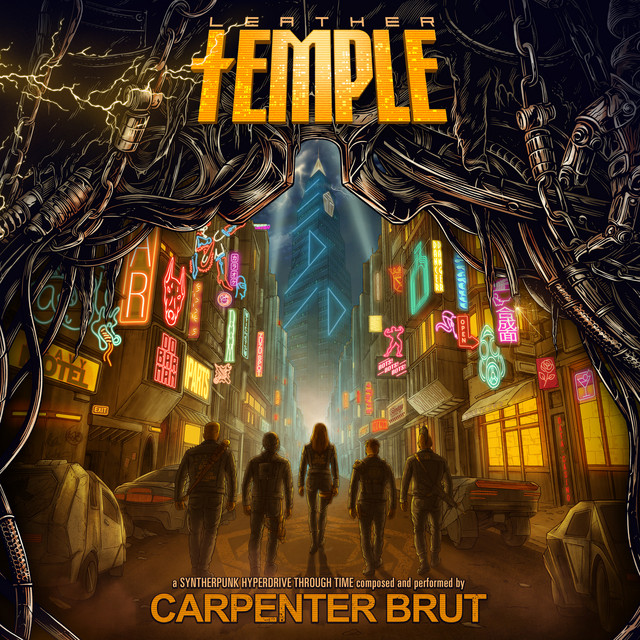
- Listen to Leather Temple by Carpenter BrutLeather TempleCarpenter Brut · Leather Temple, 2025
- Listen to OUBLIETTE by KMFDMOUBLIETTEKMFDM · OUBLIETTE, 2025
- Listen to Burn by The Cure
- Listen to Love Theme by Vangelis
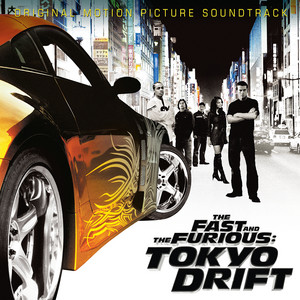
- Listen to Tokyo Drift (Fast & Furious) - From "The Fast And The Furious: Tokyo Drift" Soundtrack by Teriyaki BoyzTokyo Drift (Fast & Furious) - From "The Fast And The Furious: Tokyo Drift" SoundtrackTeriyaki Boyz · The Fast And The Furious: Tokyo Drift (Original Motion Picture Soundtrack), 2006
- Listen to Neverending by Timecop1983NeverendingTimecop1983 · Neverending, 2025
- Listen to Black Wolf by Zombie HyperdriveBlack WolfZombie Hyperdrive · Black Wolf, 2020
- Listen to Spin My Heart (Round & Round) - Extended by VoiciansSpin My Heart (Round & Round) - ExtendedVoicians · Spin My Heart (Extended), 2025





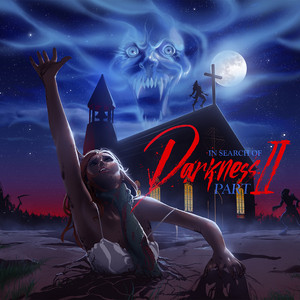

Top albums







Best playlists



Influenced by


Other similar genres
Genres sharing the most artists with Cyberpunk